Understanding the Science Behind Vinegar’s Effectiveness
The effectiveness of vinegar is largely due to its acetic acid content, which typically ranges from 4% to 8% in most household vinegars. Acetic acid is a weak acid that can break down mineral deposits, dissolve grease, and kill some types of bacteria and viruses. This makes vinegar an excellent alternative to harsher chemical cleaners, especially for those looking to maintain a more eco-friendly home.
How to Choose the Right Type of Vinegar for Each Hack
Not all vinegars are created equal, and choosing the right type is crucial for maximizing effectiveness. White vinegar, with its higher acidity and lack of color, is ideal for cleaning and disinfecting. Apple cider vinegar, with its milder acidity and pleasant aroma, is better suited for personal care and deodorizing. Balsamic and wine vinegars, while flavorful, are not recommended for cleaning due to their color and potential to stain.
Safety Precautions When Using Vinegar for Cleaning
While vinegar is generally safe, it’s important to use it correctly to avoid damage. Never mix vinegar with bleach or hydrogen peroxide, as this can create harmful gases. Test vinegar on a small, inconspicuous area before using it on delicate surfaces. Additionally, avoid using vinegar on natural stone surfaces like marble or granite, as the acid can etch and damage the stone.
Top 20 Vinegar Hacks You Need to Know
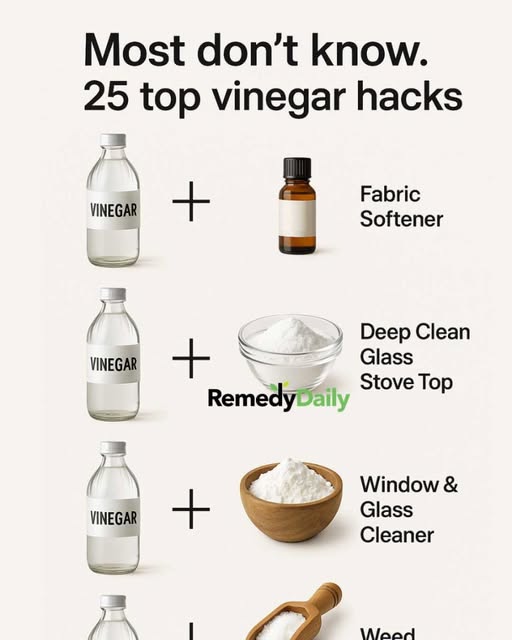
Most don’t know. 25 top vinegar hacks
Vinegar, a staple in most kitchens, is often overlooked for its versatility beyond cooking. This humble liquid, primarily composed of acetic acid and water, has been used for centuries in various applications. From cleaning to personal care, vinegar’s potential extends far beyond its culinary uses. This article explores 25 ingenious vinegar hacks that can simplify your life, save money, and reduce reliance on harsh chemicals.
The Versatility of Vinegar in Everyday Life
Vinegar’s versatility stems from its acidic nature, which makes it an effective cleaning agent, deodorizer, and even a natural pesticide. Its ability to dissolve mineral deposits, cut through grease, and neutralize odors makes it a valuable tool in any household. Whether you’re looking to clean your home, maintain your garden, or freshen up fabrics, vinegar offers a natural and cost-effective solution.
